
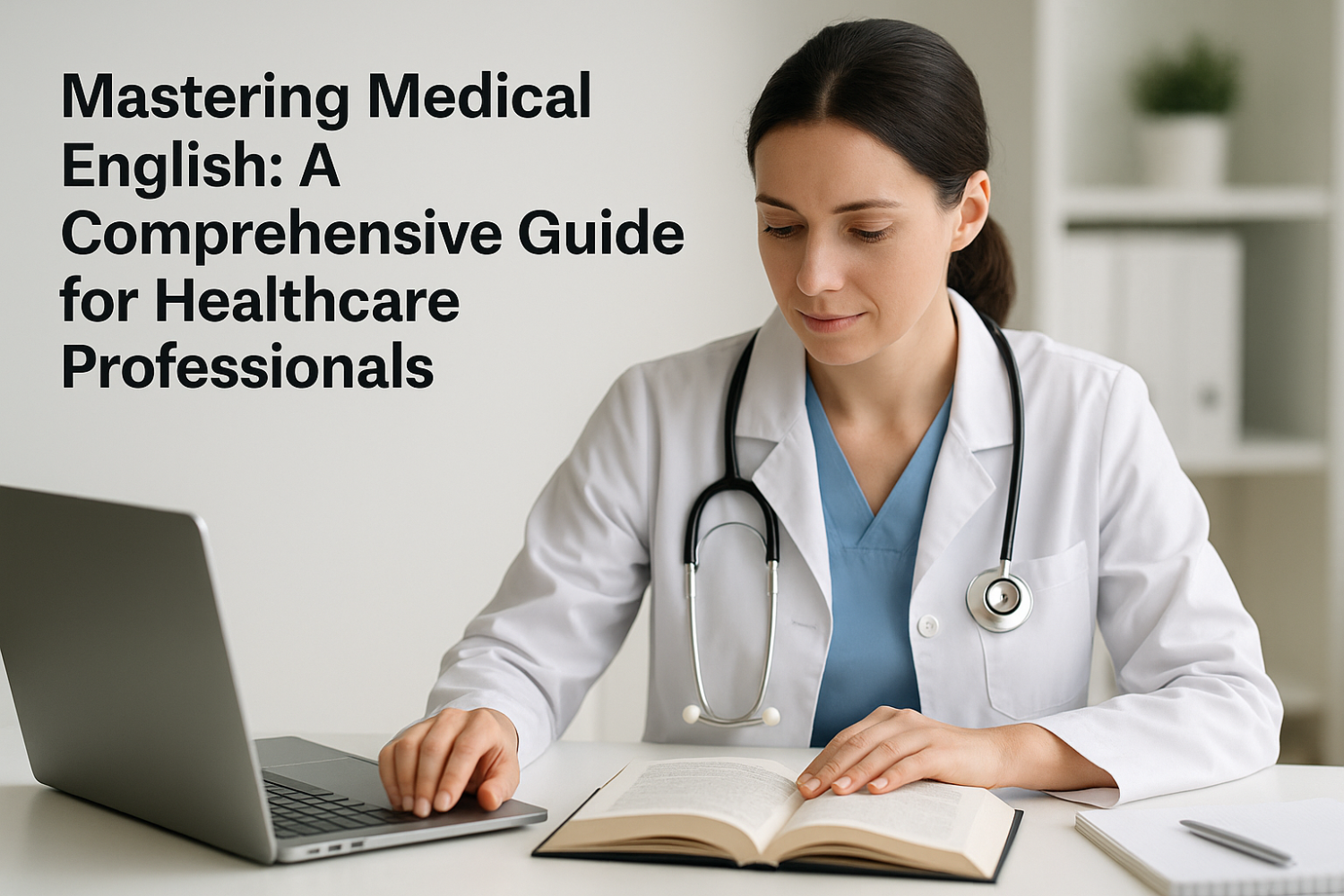
Mastering Medical English: A Comprehensive Guide for Healthcare Professionals
Enhance your medical career by mastering Medical English. This guide covers essential vocabulary, communication tips, and practical strategies for healthcare professionals worldwide.
Introduction to Medical English
Medical English is a specialized branch of the English language used by healthcare professionals worldwide. It encompasses terminology, communication skills, and writing styles essential for effective patient care, research, and collaboration across international medical communities.
Why Medical English Matters
In an increasingly globalized world, proficiency in Medical English allows healthcare professionals to:
- Communicate accurately with colleagues and patients from diverse backgrounds
- Understand and interpret medical literature and research
- Document patient information clearly and professionally
- Participate in international conferences and training
Core Components of Medical English
1. Medical Vocabulary
Medical vocabulary includes terms related to anatomy, diseases, treatments, diagnostics, and pharmaceuticals. Building a strong vocabulary foundation is crucial.
2. Communication Skills
Effective communication involves both verbal and written skills, including patient interviews, case presentations, and medical report writing.
3. Reading and Writing Medical Texts
Understanding scientific articles, clinical guidelines, and patient records requires familiarity with typical structures and formats used in medical literature.
Practical Tips to Improve Your Medical English
- Read Regularly: Engage with medical journals, textbooks, and reputable online resources to familiarize yourself with terminology and context.
- Use Flashcards: Create flashcards for new vocabulary and review them consistently.
- Practice Speaking: Join language exchange groups, participate in role-plays, or attend workshops focused on medical communication.
- Write Daily: Maintain a journal or write case summaries to improve your medical writing skills.
- Listen and Watch: Use medical podcasts, lectures, and videos to enhance listening comprehension and pronunciation.
Common Challenges and How to Overcome Them
- Complex Terminology: Break down words into prefixes, roots, and suffixes to understand meanings.
- Cultural Differences: Learn about culturally sensitive communication to better interact with diverse patients.
- Pronunciation Difficulties: Use phonetic tools and repeat difficult words aloud to improve clarity.
Useful Resources for Learning Medical English
- Online platforms like Medscape and BMJ Learning
- Medical English textbooks such as "English for Medical Purposes"
- Apps like Quizlet for vocabulary building
- Podcasts and YouTube channels dedicated to medical education
Conclusion
Mastering Medical English is a valuable investment for healthcare professionals aiming to advance their careers and provide the best patient care. Consistent practice, exposure to medical contexts, and utilization of diverse learning tools will significantly enhance your proficiency.
Continue learning
Explore related internal resources to deepen this topic.